Showing posts with label anime. Show all posts

Friday, April 29, 2016

Bakemonogatari - Why Art Direction Matters


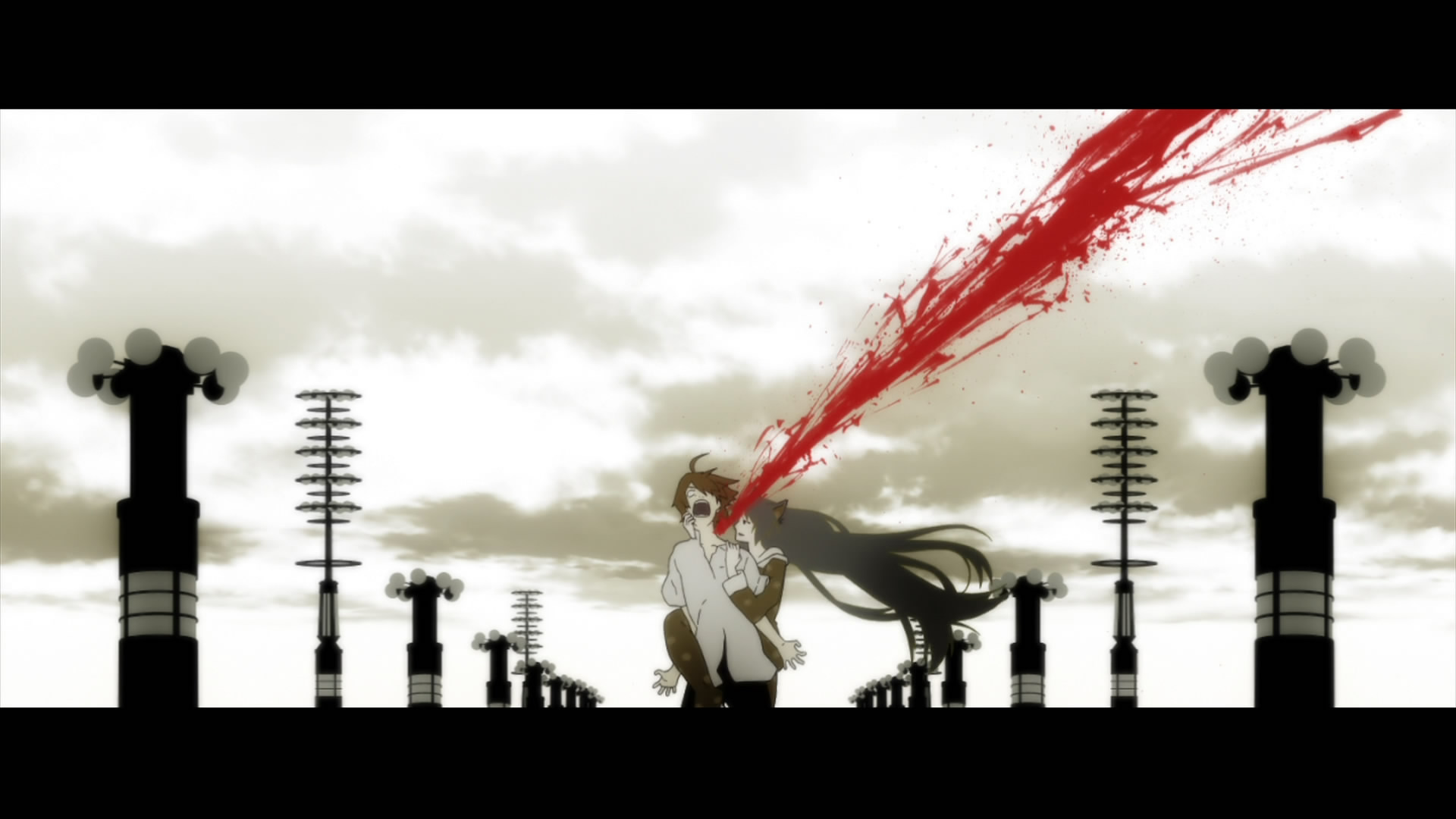
I wanted to do a little post about the current trends in anime art direction. Many of the big studios mass-produce several series a season, and like their American live-action counterparts, they tend to all look the same. They're nice-looking, clean and functional; but nothing stands out or is memorable about them. Places like Bones and A-1 Studios make series that are easy on the eyes, but the art direction rarely stands out from the crowd. However, smaller studios like Silver Link and SHAFT (the one I will be referencing here) have smaller budgets, and thus can't afford the full, lush animations that big studios give series and have to get creative to tell their stories. And Bakemonogatari, by SHAFT, might be one of the most interesting-looking animes ever made.


First thing you will notice about Bakemonogatari is how simple it looks. It lacks much of the detail you tend to see in current anime, often using silhouette and solid color to fill out foregrounds, backgrounds, and even character models. Much is made of colors and palette swaps, and heavy use of spotlight and shadow to focus the viewer and depict moods and developments. Many scenes have static environmental shots interspersed with exposition, showing us physical objects that correlate to the subtext of the scene versus just the character's faces as they speak. Aspect ratio gets played with quite a bit to change the tone of a scene. Often times, there are just blank cells with the scene or animation number, and what is "supposed" to be animated there. There are rapid fire scenes of just printed words that can be interpreted as internal monologues of characters or backstory that are lightning fast. There are even highly stylized live-action scenes edited in. It all helps add to the sense of unease and "weirdness" of the show.
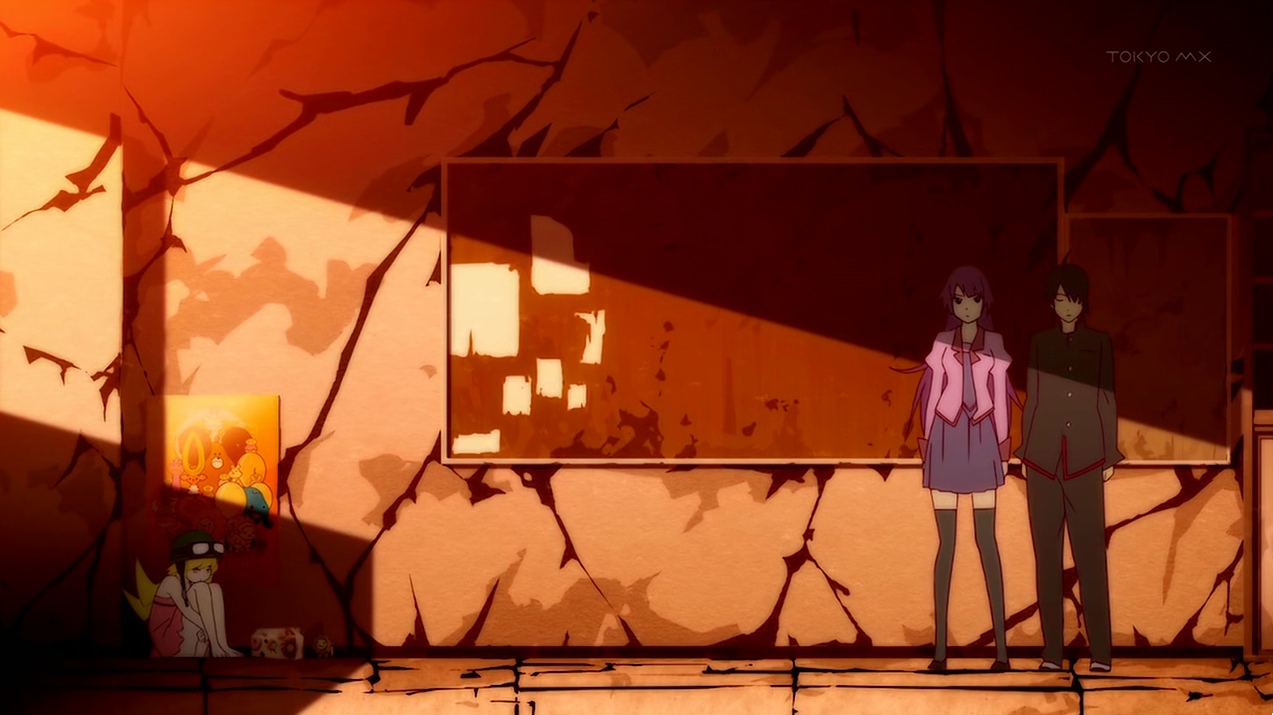


Given that Bakemonogatari is a story about ghosts, vampires, demons, Gods, curses, and powers, these choices in the art direction make sense. The muted tones, stark lighting, and abundant "off-ness" of some of the scenes (characters will often be animated standing in a different place each cut, closer or farther away from other characters depending on their words or tone) can make the viewer question everything they are seeing. It causes us as the audience to become a bit of an unreliable narrator, because there are very few "rules" when it comes to the supernatural, and this show like to play with all of them. When characters reveal things we've been seeing aren't there, or don't mean what we thought they mean, accompanied by unusual shot composition and framing, it disorients you and keeps you from guessing where the story is headed next.
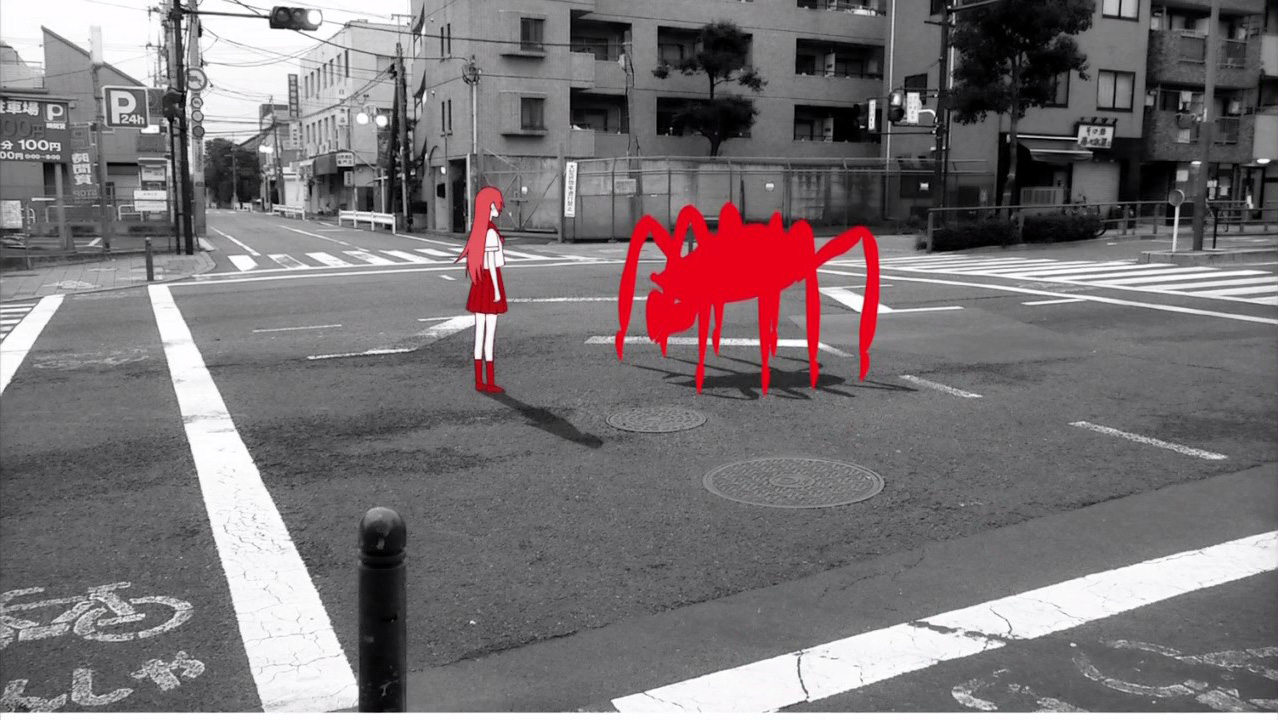


SHAFT, and lead director Akiyuki Shinbo in particular is known for having this very unique and stylish look to their series. Bakemonogatari is one of the prime examples of their "style," and to date the entire Monogatari series has been their biggest claim to fame, but they are also well-known and beloved for their work on Puella Magi Madoka Magica. And, I think, in the end, because of SHAFT's limited size and budgets, it forces them to be so much more creative in their process, and rather than just animating everything the same, at a "higher quality." Their work is instantly recognizable and much, much more interesting to watch than another generic shonen series with "pretty" fights and perfectly-drawn backgrounds. Sometimes, less is more; and every once in a while, less can even be a feast.



Monday, February 1, 2016

Pet Girl of Sakurasou - A Review

                 "I realized... It wasn't that the days were boring. It was being just like everyone else."

Pet Girl of Sakurasou (or just Sakurasou as I will refer to it) is a surprising anime. What appears, at first, to be a rom-com slice of life series about a group of eccentrics, geniuses, and weirdos becomes an emotionally complex look at the impact talent and genius can have on average and gifted people alike. Our protagonist is Sorata Kanda, a high school boy of average intelligence, talent, and looks who is hard-working and kind-hearted. The former trait allowing him to be enrolled at a private high school for the arts named Suimei, the latter trait leads him to taking in every stray cat he sees and thus getting him expelled from his dormitory. He moves into Sakura Hall, an off-campus residence for "problem students" where he meets peers of his who are exceedingly talented, but also exceedingly strange. And while he cares deeply for his new friends, he is also deeply conflicted as a result of being around them.


“[You know...] with talented people... They draw people to themselves and without trying to, they tear them to shreds. The closer you are to them, the more viciously you’ll be torn apart.”

The main conflict of the series is an internal one Sorata, and another girl in his class Nanami suffer through; that no matter how hard they work, no matter how much of themselves they sacrifice to try and get ahead, the world is an unfair place and those with raw, natural talent will always come out ahead. It's played out time and time again for our two more average protagonists that failure is a very real and often unavoidable thing, and it's often juxtaposed against the successes and achievements of their talented peers. The show goes to great lengths to allow us to see the emotional toll these events take on our characters, and isn't afraid to make them lash out nastily or react in a very negative, but human, manner. Threaded into this central conflict are a handful of romances, often interrupted, derailed or complicated by the failures and successes of the characters. It comes together to created a detailed and emotional mosaic of life among those who are both very skilled, but still immature.


"Hey, what color do you want to be?"

But, the show does not let you down on your initial impression of the series as being a funny one, because it is very, very funny at times. The dialog is sharp, the characters very fully-formed, and the interactions they have are often the biggest highlights of the show. But, the real meat of the series lies in the (sometimes uncomfortably familiar) feelings of coping with conflict and failure, and where a person's true value lies. The show is also animated almost excruciatingly beautifully, with the smallest details left in, like seeing a character's pupil expand and contract as they become emotional. Overall, this is a powerful series that deals with the one thing modern fiction especially doesn't like to, which is the fact not everyone has some secret hidden talent that will just come bursting out if they work hard enough and believe in themselves. Sometimes, your best won't be good enough, but that doesn't matter as long as you do try, and are a good person to those around you. That's the real message of Sakurasou, and it's a message that will resonate long after all the other series about incredible, limitless heroes fade into the background.


Pet Girl of Sakurasou: 9/10


Monday, September 28, 2015

Your Lie in April: A Review


Your Lie in April is an anime about the turbulence of youth, first love, and the explosive power of music to channel our deepest emotions and project them onto others. The series focuses on 14-year old Kosei, a former piano prodigy who stopped playing after suffering a mental breakdown due to his mother's death. He finds himself unable to hear the notes he plays anymore, and his life has become dull and aimless as a result. This all changes when he meets Kaori, a spirited and wild violinist who motivates Kosei to play once again, with feeling. Alongside Kaori and his childhood friends Watari and Tsubaki, Kosei confronts the spectres haunting him, and discovers what really lies in the heart of a musician.


 First and foremost, the most noticeable thing about Your Lie in April is the astounding visuals present. Mixing traditional hand-drawn animation with CGI and watercolors, Your Lie in April might be the best looking anime of all time. The backgrounds are often detailed and gorgeous, heightening the mood of the scene without overwhelming it. And, the visuals are at their finest during the musical performances. Rather than show us what the audience would see with the naked eye, we are taken into an alternate reality of sorts, the inner mind-scape of the musician. The show crafts surreal, elegant, and often poignant sequences that convey the emotions and innermost thoughts of the musician while they play, springing to life the feelings they are attempting to share with the audience through their playing. Also significant is the use of color and pallet when relating to Kosei's journey in particular. At first, he sees the world in drab, monotone colors, washed out and blending together. But, Kaori's introduction brings a bright blast of color to the show, and the colors only deepen and become richer as the series progresses.


The music is, of course, incredible. The series has a wonderful original score, but the real highlights are the classic pieces performed by our musicians. From Beethoven to Chopin to Kreisler to Debussy, there is a wide variety of music present, and each one is used to punctuate a character arc, opening a window into our character's soul. From Kaori's free-wheeling with tempo on "Violin Sonata No.9, 1st Movement" to Kosei's emotional farewell to his mother via "Love's Sorrow" these familiar pieces become imbued with new meaning, and become transcendent. Combined with the unique visuals, each piece becomes a whole new thing, something you want to be able to live in yourself over and over again, to be able to feel that openly and grandly.


My only nitpick with Your Lie in April, and it's a small one, is the over-use use of slapstick humor. While levity is much needed to allow you to breathe in between the monstrously huge emotional performances, the use of physical humor (usually against a boy who had at one point suffered abuse) falls flat in comparison to the rest of the series' successes. But really, it's nothing that takes away from the show, but rather it stands out so much because the rest of the series is so good at everything it does. The voice acting is top notch, and the story is simple but told well and with wonderful, well-rounded characters. The show manages to balance rapturous joy with tragic heartbreak at every turn, making you invest more and more of yourself into the story and these characters. Even just thinking about moments in the series, or hearing that opening titles song can make all kinds of emotions rise to the surface and soar out of me. Kaori often asks in the show, "Will you forget me?" The answer, Your Lie in April, is never.  10/10