Monday, April 2, 2012
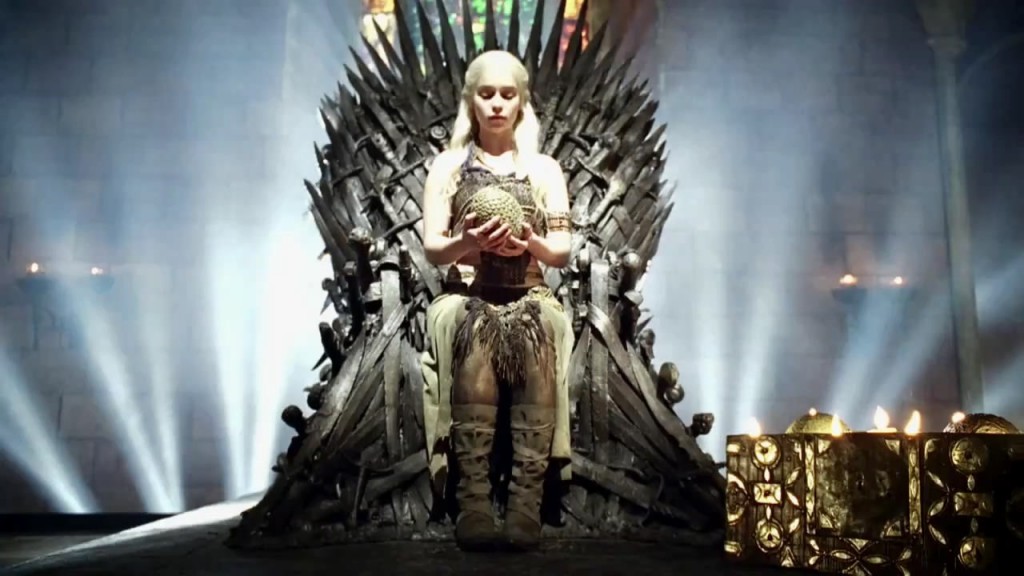
Listen or Die: Episode 2
Listen in as Todd and Jenny discuss the season 2 premiere of Game of Thrones, "The North Remembers."
http://reeltimepodcast.org/2012/04/02/listen-or-die-a-game-of-thrones-podcast-2/
Monday, March 26, 2012
Series Review: Friday Night Lights
Friday Night Lights (FNL) is one of the greatest television series of this past decade, and possibly all time. Expanding on a book and a film of the same name, the tv series took the themes of small-town communities, sports culture, and relationships and proceeds to tell the story of a town, its high school football team(s), and the family at the center of it. Relying on solid writing, strong acting, and a focus on detail, FNL managed to make every game matter, every fight painful, and every triumph breathtaking.
The show is anchored on the relationship of Eric and Tami Taylor, played masterfully by Kyle Chandler nd Connie Britton. Their on-screen marriage is quite possibly both the most realistic and the best acted example of a television relationship that exists. There is a quiet confidence in the writing and the acting, with neither character ever trying to impose or force the relationship or it's trials on the audience. It feels like we, as the audience, are just in the room with them as they live, not having actors perform for us. Together, the Taylors are the heart of the show, and provide the necessary balance for the teenage characters' drama to play off of. You want to see both of them succeed and be happy, because in short order they become two people whom you feel you've known your whole life, and love dearly.
The show progresses through five consecutive seasons of football in the All-American town of Dillon, Texas. The first episode presents the show as a pseudo-reality show documenting the apparent rise of a football dynasty for the Dillon Panthers with the reunion of Coach Taylor and his star pupil QB. We initially meet the major players on the team via interviews with reporters and camera crews, assuring that the audience at first only sees the stereotypes that these players often represent in our culture. There's the arrogant, loud-mouth running back, the composed and media-trained star quarterback, and the drunk, loser redneck fullback. Oh, and the quiet, unassuming freshman back-up quarterback who is just happy to be on the team so he can have some relief from having to work a demeaning job and care for his infirm grandmother. But, then something happens. In the very first game, a horrible accident occurs that leaves the star QB seriously injured, and the unassuming back-up is thrust into the spotlight. At that moment, the show stops being a pseudo-reality and starts shooting in more traditional format, although the look of a hand-held voyeur camera never completely leaves the show.
As the series progresses, we see how every character subverts, and eventually destroys any kind of stereotype or pre-conceived notion we had of them. Every character undergoes major growth and change, often surprising us in wonderful ways. The best example of this is Tyra, the smoking hot blonde that seems to live for parties and will seemingly follow in her older sister's footsteps all the way to the strip club. She finds confidence in her academic life from an unlikely source and feverishly pursues a way out of the town and culture that claimed her family. And, the show is not afraid to rotate out older characters, as life takes them away from Dillon and it's football team, and then add brand new characters that provide entirely new stories and actively shape our remaining characters in new ways. Vince, not part of the show until season 4, is one of the best characters on the show, and his presence creates opportunity to explore new aspects of modern America and how the line between coach and father can blur.
The show also takes a lot of pride in it's locations. Texas Hill Country provides some of the most beautiful scenery in America, and it is utilized well in the show. The unique culture of Texas in regards to high school football makes for intriguing drama that has roots deep in the identity of America and how it evolves, or in some cases, doesn't. The intimate setting provides little distraction from what's important on the show, the characters. In the end, no matter how many games were won or lost, the characters were what mattered, and made FNL shine. You laugh, cheer, and cry with them as life unfolds, and when the series comes to it's bittersweet end, you feel as though you have lived a bit of your own life with these characters. And that's the best possible thing for a tv show to do.
Clear eyes, full hearts, can't lose.
Sunday, March 18, 2012
You Listen or You Die: Episode 1
The first episode of the new Game of Thrones podcast I am co-hosting is now online!
http://reeltimepodcast.org/2012/03/19/listen-or-die-a-game-of-thrones-podcast-1/
Thursday, March 8, 2012
Upcoming News
Just in time for Season 2 to start, the gregarious and lovely Jenny Kelly and myself will be starting a Game of Thrones podcast. Reel Time has generously allowed us the platform to discuss our current favorite show airing, and I will be posting updates and new podcasts here as well as they air. I hope you all will join me as Jenny and I dive into the magical, brutal, and sexy world of Game of Thrones on HBO!
http://reeltimepodcast.org/
Saturday, February 11, 2012
Naked: A Review
Watching Naked for the first time is quite like getting a tattoo someplace awkward. It can be aggravating, abrasive, noisy, and downright unpleasant during the duration. However, once you are finished, and you sit back and admire the work done, it can be an entirely satisfying and meaningful experience. As we follow the bitter and egotistical Johnny across London, we are witness to a man who is entirely unsatisfied with the world around him, and will stop and take the time to let you know about it. He seduces women, only to use their attraction as a form of punishment against them. He pontificates and preaches at great length about subjects that run the gamut from nihilism to transhumanism regardless of the interest of his audience. He is both a victim and a tormentor, mixing pain and pleasure to further levy control over those he views as weak and therefore beneath him. And he can never stop moving. Whether it's to escape the inevitable consequences of his actions, or because he is afraid to become stagnant, Johnny is always running. Any time it seems like Johnny might become stationary due to someone or something, he flees.
As I watch David Thewlis slip into the skin of this manic-depressive pariah, I can't help but admire the talent shown in both actor and director here. Thewlis and Leigh create in Johnny a Hamlet for Generation X. Disaffected, bitter, reckless, but eloquent and painfully aware of his own brilliance, Johnny can't help but try and provoke everyone he meets for a chance to display his believed superiority. He scoffs at people who work regular jobs, mocking the normalcy and routine of it all, while he pinballs his way around whatever locale he just happens to find himself in with no direction or intention. He chases women, and then grows tired of them almost immediately. He steals books, money, food, and time from anyone he can. This behavior, while cheeky at best and reckless at worst, is echoed darkly by Leigh's scenes with Jeremy, the sadistic and corrupt landlord that uses his money and position to assert power over those he controls. Kept apart for almost the entirety of the film, once Johnny and Jeremy finally cross paths, it is a scene where Johnny is left completely vulnerable for the first time in the film, as all of Johnny's intellectual superiority is rendered useless. Johnny may be clever enough to survive outside of society and in spite of it; but Jeremy is almost the personification of the late 80's early 90's "high" society, and scoffs in the face of any threat posed by other people. He knows he has control because he is simply more dangerous than anyone else in the room.
Mike Leigh has been praised for his work on this film, and rightfully so. He is able to capture the ever-changing attitude of Johnny with shots that alternate from manic panning back and forth of two adjacent rooms, close-ups on characters' faces as they attempt to mask their emotions, or long stark wide shots as Johnny espouses his apocalyptic beliefs to a lone night guard or as he walks aimlessly down a filthy, dark alley. The film uses hand-held cameras to provide a jarring, jittery movement to the film at times to mirror Johnny's emotion, usually his mania. The prominent grainy texture of the film also adds to the overall state of Johnny's life and experiences, creating an atmosphere of unpleasantness that our main character seems to wrap himself in like a shroud.
Overall, I found Naked to be harsh and aggravating at times, but in a good way. It was engaging and interesting and never let up on me for a moment. It almost seems like a companion piece to Happy-Go-Lucky, with Johnny's crushing nihilism and pessimism in the face of normalcy countered by Poppy's almost impossible optimism in the face of the very same normalcy, and how society often reacts in similar fashions to these wildly different deviations of behavior. Whatever statement Leigh might be making on society's acceptance of the rejection of such personalities is second to his ability to craft such extreme personalities and then insert them into situations of near-painful averageness and set them loose for maximum entertainment. 7/10
Summer Wars: A Review
Mamoru Hosoda's follow-up to the critically acclaimed The Girl Who Leapt Through Time, Summer Wars is a sci-fi tale set against the world of social networking and the effects it has on society. Quickly in the film we are introduced to the virtual world of OZ, a larger and more advanced version of online societies like Facebook and Second Life that incorporates shopping, finances, and even production and services as well as networking and gaming with virtual avatars. The system is so advanced and safe (through its "strongest in the world" security encryption) that even major civil systems like traffic lights and power are hooked into it and controlled remotely by employees using OZ. So, when a hyper-smart "learning" AI being developed for the US Military is "test drove" by dropping it into OZ, it quickly begins to hack and hijack accounts, leading to a worldwide crisis that could have devastating effects on both the virtual world and the real one. The story is told at a crisp pace, with imaginative action scenes inside the world of OZ balanced with the real world drama of a family coming to grips with tragedy and it's own image.
Our protagonist, Kenji, is the kind of kid you'd expect to be in OZ. Lonely and awkward, but brilliant, he spends most of his time in the film coming to grips with what it means to be part of something bigger than himself, and what it means to sacrifice for it. Coming from a home with mostly absentee parents, he is a stranger to family as anything other than a concept, and uses his role as a moderator and "code monkey" for OZ to substitute. It's only after he is dragged into a large, proud family by his classmate Natsuki (who is trying to pass off Kenji as her fiance to make her Grandmother proud), and he endure trials and tragedy alongside them does he fully embrace his abilities and faults to the benefit of all.
The AI, named "Love Machine" by its creator, is a compelling antagonist for Kenji and the denizens of OZ. It is literally a faceless entity without personality, designed to aggressively learn everything it is able to, and modify itself accordingly. In a world like OZ, it is able to battle, hack, manipulate, and wreak general chaos and havoc in both worlds. Kenji, who at first sees himself as only an avatar, has that stripped away by Love Machine when his account is the first to be hacked. Suddenly, the only identity Kenji is comfortable with has been stolen and twisted, and because of the events and experiences he has with Natsuki's family, does he discard the avatar and become the person. It becomes a virtual David vs. Goliath as Kenji pits his wits and anger and passion against a construct that sees it all as nothing more than a game.
The animation, as to be expected from studios like MadHouse, is top-notch. The design of the virtual world is quirky and imaginative, and full to the brim of unique little nooks and crannies. The art of the real world in the film is also quite good, with many long, wide shots of the family used at different emotional peaks of the film, at first setting up Kenji as an outsider, but as time goes by, showing the change in him and those around him. The attention to detail inSummer Wars is also excellent, especially in the scenes where Love Machine has literally become a giant composed of hundreds of millions of smaller avatars of the accounts it has stolen (see above picture for a small glimpse). Every scene of the film, though, was finely-crafted and I found rewarding to take in.
In the end, I feel Summer Wars had a much more interesting lesson than just warning against relying too heavily on technology, which is where it seemed to be going at first as the AI took over. But, as the chaos begins to clear, and people band together, we see the true message at the heart of the film. Family. Not just the physical one we live as part of, but also the virtual ones we create with games and social networking and instant messaging. The stronger our ties to those around us, the stronger our resolve to protect and enrich one another becomes. And, in the final scenes of the film, Summer Wars shows us that these principles apply to any community and family we belong to, not just our flesh and blood relatives. 9/10
Quickie Review: Man Bites Dog
I went into this film blissfully unaware of it's subject matter, plot, or any of the gory details. For this, I am very grateful, because the pure visceral shock I received upon first starting the film made the subsequent journey all the more enjoyable. I have never been, and most likely never will be, a fan of the slasher flick. But, despite Man Bites Dog containing a large amount of gore and death, I found myself enthralled rather than repelled by the film. The editing is sharp, often juxtaposing extremes to maximum comedic effect, which contributes more to the feeling of "strangeness" than the events depicted onscreen. There are cases where quick jump cuts of people being brutally murdered form almost a visual and sonic melody set against long, quiet, almost serene shots of their bodies being dumped into a quarry. The humor of the film was easily the best and most pleasant surprise, often making me laugh in spite of myself at extremely inappropriate moments, like people being shot. And I rarely laugh when people get shot. Like, 25% of the time. 40% tops. Or, running into a different killer with his own set of film crew and the light-hearted manner in which they dispose of the mirror reflections of themselves. Also, the running gag of sound guys being killed off like drummers in Spinal Tap was amusing. Especially when given an obituary in-film by the director referring to their deaths as "occupational hazards" and dedicating the film to their memory. Twice.
Despite the humor, the film itself is extremely dark in subject matter. Seeing the film crew slowly but steadily fall into a routine of not just observing murder, but participating in the grisly activities, is not only disturbing, but begs the question of responsibility of the artist. It reminded me of debates I have heard over journalists who visit war-torn or poor areas and whether or not they should intercede or just observe and report. While (obviously) in the film, the situation is more immediate and dire, the morality behind it draws the appropriate parallels about the responsibility of media in the face of tragedy and suffering. The film crew that act as Benoit's shadows and accomplices eventually get caught in the web of violence and meet the same end as those who trade in violence, and it feels both bittersweet and appropriate. 7.5/10
Subscribe to:
Posts (Atom)